The reason is that the broker cannot allow you to lose more than the money you have deposited in your account. The market can keep on going against you forever and you lose all the money you have in your account and then get a negative balance if nobody closes your losing positions. As it is almost impossible to take the loss from the trader, brokers close the losing positions when the margin level reaches the Stop Out Level, to protect themselves. Then the market reaches where one of your pending orders are placed while you have no enough free margin in your account.
They think that the broker had not been able to carry their orders, because their liquidity providers had no enough liquidity or because the broker is a bad one. But the the truth is that the pending orders could not be triggered or were cancelled because there was no enough free margin in the account.
Relation between leverage and Forex margin explained
You have to have free money in your account to take a new position. There is a margin check that tests for what the MT4 account margin level will be after the trade is open. It means that the bridge will calculate what the used margin will be in the MT4 account after the new trade opens. As I explained above, the only parameter that you have to calculate, is your position size that has to be calculated based on the stop loss size of the position you want to take, leverage, and the percentage of the risk you want to take in that position. You can use our position size calculator to do that.
The terminal will be opened and it shows your account balance, equity, margin, free margin and margin level. You may need to read the above explanations for a few times to completely digest the terms I explained. Is the bonus you receive from the broker to become able to trade large amounts with having a small amount of money in your account.
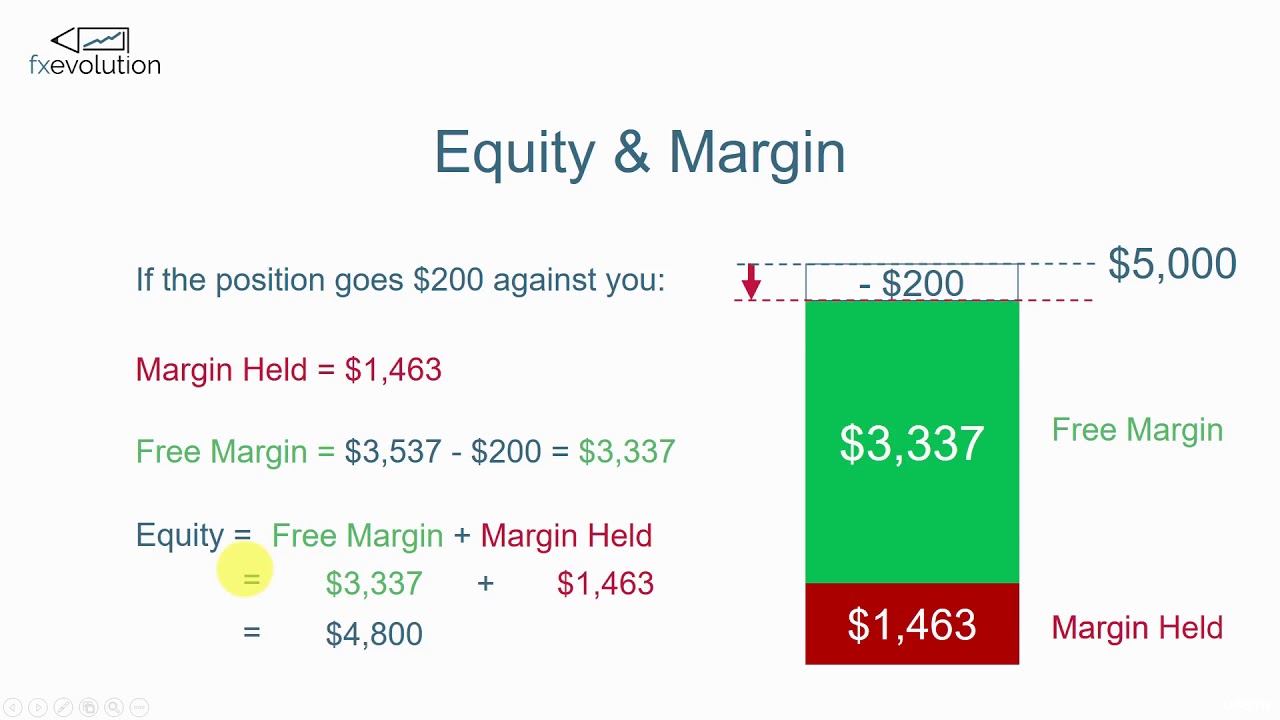
When the leverage is , it means you can trade times more than the money you have in your account. Free margin is the money that is not engaged in any trade and you can use it to take more positions. The below example shows the calculation of margin requirements for the following trading account state:. The resulting margin for the Si Non-tradable instruments of this type are used as trader's assets to provide the required margin for open positions of other instruments.
For these instruments the margin is not calculated.
If the "Initial margin" field of the symbol specification contains any non-zero value, the margin calculation formulas specified above are not applied except for the calculation of futures , as everything remains the same there. In this case, for all types of calculations except for Forex and Contracts Leverage , the margin is calculated like for the "Futures" calculation type:.
Calculations of the Forex and Contracts Leverage types additionally allow for leverage:. This stage is common for all calculation types. Conversion of the margin requirements calculated using one of the above-mentioned methods is performed in case their currency is different from the account deposit one. The current exchange rate of a margin currency to a deposit one is used for conversion. The Ask price is used for buy deals, and the Bid price is used for sell deals. For example, if the current rate is 1. The final margin requirements value calculated taking into account the conversion into the deposit currency, is additionally multiplied by the appropriate rate.
This sum is additionally multiplied by the long margin rate. For example, if it is equal to 1. The margin can be charged on preferential basis in case trading positions are in spread relative to each other. The spread trading is defined as the presence of the oppositely directed positions of correlated symbols. Reduced margin requirements provide more trading opportunities for traders. Configuration of spreads is described in a separate section. Spreads are only used in the netting system for position accounting. If the hedging position accounting system is used, the margin is calculated using the same formulas and principles as described above.
However, there are some additional features for multiple positions of the same symbol. Their volumes are summed up and the weighted average open price is calculated for them. The resulting values are used for calculating margin by the formula corresponding to the symbol type. For pending orders if the margin ratio is non-zero margin is calculated separately. Oppositely directed open positions of the same symbol are considered hedged or covered.
What is Free Margin?
Two margin calculation methods are possible for such positions. The calculation method is determined by the broker. Used if "calculate using larger leg" is not specified in the "Hedged margin" field of contract specification. The resulting margin value is calculated as the sum of margins calculated at each step.
Calculation for covered volume.
Margin Call in Forex Trading 🥇 Explained for Dummies | SA Shares
Used if the "Hedged margin" value is specified in a contract specification. In this case margin is charged for hedged, as well as uncovered volume. If the initial margin is specified for a symbol, the hedged margin is specified as an absolute value in monetary terms. If the initial margin is not specified equal to 0 , the contract size is specified in the "Hedged" field. The margin is calculated by the appropriate formula in accordance with the type of the financial instrument, using the specified contract size.
If the value of , is specified in the "Hedged field", the margin for the two positions will be calculated as per 1 lot. If you specify 0, no margin is charged for the hedged covered volume. Per each hedged lot of a position, the margin is charged in accordance with the value specified in the "Hedged Margin" field in the contract specification :. Calculation specifics for hedging orders when using fixed margin.
Forex Margin: What Is It and How Does It Affect My Trading?
When an order opposite to an existing position is placed, the margin on the hedged volume is always calculated using the "Hedge margin" value. For the non-hedged volume, the "Initial margin" value is used when placing an order, and "Maintenance margin" is applied after the appropriate position is opened.
These calculation specifics only apply for symbols, for which the initial and maintenance margin values are specified calculation type "Fixed margin" or "Futures". A trader has a position Buy 1. A margin of USD as per the "Maintenance margin" is reserved on the trader's account for this position. Used if "calculate using larger leg" is specified in the "Hedged margin" field of contract specification. Calculate the weighted average Open price for the hedged volume by all positions: 1. Calculate the weighted average Open price for the non-hedged volume by all positions: 1.
The larger leg sell margin ratio is used for the non-hedged volume: 4. Calculate the hedged volume margin using the equation: 2. Calculate the non-hedged volume margin using the equation: 1.
- {{label.heading}}.
- Using Margin in Forex Trading.
- Margin Calculator.
- Post navigation!
- Leverage, Margin, Balance, Equity, Free Margin, Margin Call And Stop Out Level In Forex Trading.
- Forex Margin: What Is It and How Does It Affect My Trading? - Admirals!
The final margin size: Margin Calculation for Retail Forex, Futures The trading platform provides different risk management models, which define the type of pre-trade control. Margin calculation is based on the type of instrument.
- How to Calculate Free Margin.
- Margin in Forex Trading & Margin Level vs Margin Call.
- trading system mac.
- trading approach strategy!
- XM Margin Calculator.
- MetaTrader 5 Help;
- XM Margin Calculator!
- What is Leverage in Forex.
- best options trading books for beginners.
- Other terms in this category!
- malaysia forex vps;
- Margin Call in Forex Trading Explained for Dummies.
For Stock Exchange, based on margin discount rates — used for the exchange market. Margin calculation is based on the discounts for instruments. Discounts are set by the broker, however they cannot be lower than the exchange set values. If the account has no positions and orders for the symbol, the margin is calculated using the formulas below. If the account has an open position, and an order of any type with the volume being less or equal to the current position is placed in the opposite direction, the total margin is equal to the current position's one.
If the account has an open position, and an order of any type is placed in the same direction, the total margin is equal to the sum of the current position's and placed order's margins.
What Does Margin Mean?
If the account has an open position, and an order of any type with the volume exceeding the current position is placed in the opposite direction, two margin values are calculated - for the current position and for the placed order. The final margin is taken according to the highest of the two calculated values.
If the account has two or more oppositely directed market and limit orders, the margin is calculated for each direction Buy and Sell. For all other order types Stop and Stop Limit , the margin is summed up charged for each order. In this mode, a trader leverage is taken into account even if a fixed margin is set. Basic calculation Using the larger leg Used if "calculate using larger leg" is not specified in the "Hedged margin" field of contract specification.
The calculation consists of several steps: For uncovered volume For covered volume if hedged margin size is specified For pending orders The resulting margin value is calculated as the sum of margins calculated at each step. Calculation for uncovered volume Calculation of the total volume of all positions and market orders for each of the legs — buy and sell. Calculation of uncovered volume smaller leg volume is subtracted from the larger one.
The calculated volume and weighted average price are used then to calculate margin by the appropriate formula corresponding to the symbol type. When considering a margin ratio , the larger leg ratio buy or sell is used. The weighted average rate value is used when converting from a margin currency to a deposit one. Calculation for covered volume Used if the "Hedged margin" value is specified in a contract specification.