The issuance of shares to employees with, say, a three-year vesting period is considered to relate to services over the vesting period. Therefore, the fair value of the share-based payment, determined at the grant date, should be expensed over the vesting period. As a general principle, the total expense related to equity-settled share-based payments will equal the multiple of the total instruments that vest and the grant-date fair value of those instruments.
- forex margin vs free margin.
- strategies of options;
- Reader Interactions;
In short, there is truing up to reflect what happens during the vesting period. However, if the equity-settled share-based payment has a market related performance condition, the expense would still be recognised if all other vesting conditions are met. The following example provides an illustration of a typical equity-settled share-based payment.
Financial Reporting for Employee Stock Options: Liabilities or Equity?
Company grants a total of share options to 10 members of its executive management team 10 options each on 1 January 20X5. These options vest at the end of a three-year period. The company has determined that each option has a fair value at the date of grant equal to The company expects that all options will vest and therefore records the following entry at 30 June 20X5 - the end of its first six-month interim reporting period.
If all shares vest, the above entry would be made at the end of each 6-month reporting period. However, if one member of the executive management team leaves during the second half of 20X6, therefore forfeiting the entire amount of 10 options, the following entry at 31 December 20X6 would be made:. Depending on the type of share-based payment, fair value may be determined by the value of the shares or rights to shares given up, or by the value of the goods or services received:.
Note: Annual Improvements to IFRSs — Cycle amend s the definitions of 'vesting condition' and 'market condition' and adds definitions for 'performance condition' and 'service condition' which were previously part of the definition of 'vesting condition'. The amendments are effective for annual periods beginning on or after 1 July The determination of whether a change in terms and conditions has an effect on the amount recognised depends on whether the fair value of the new instruments is greater than the fair value of the original instruments both determined at the modification date.
Modification of the terms on which equity instruments were granted may have an effect on the expense that will be recorded. IFRS 2 clarifies that the guidance on modifications also applies to instruments modified after their vesting date. If the fair value of the new instruments is more than the fair value of the old instruments e. If the modification occurs after the vesting period, the incremental amount is recognised immediately. If the fair value of the new instruments is less than the fair value of the old instruments, the original fair value of the equity instruments granted should be expensed as if the modification never occurred.
The cancellation or settlement of equity instruments is accounted for as an acceleration of the vesting period and therefore any amount unrecognised that would otherwise have been charged should be recognised immediately. Any payments made with the cancellation or settlement up to the fair value of the equity instruments should be accounted for as the repurchase of an equity interest. Any payment in excess of the fair value of the equity instruments granted is recognised as an expense.
New equity instruments granted may be identified as a replacement of cancelled equity instruments. In those cases, the replacement equity instruments are accounted for as a modification. The fair value of the replacement equity instruments is determined at grant date, while the fair value of the cancelled instruments is determined at the date of cancellation, less any cash payments on cancellation that is accounted for as a deduction from equity.
IFRS 2 is effective for annual periods beginning on or after 1 January Earlier application is encouraged. All equity-settled share-based payments granted after 7 November , that are not yet vested at the effective date of IFRS 2 shall be accounted for using the provisions of IFRS 2. Entities are allowed and encouraged, but not required, to apply this IFRS to other grants of equity instruments if and only if the entity has previously disclosed publicly the fair value of those equity instruments determined in accordance with IFRS 2.
The comparative information presented in accordance with IAS 1 shall be restated for all grants of equity instruments to which the requirements of IFRS 2 are applied.
Section Menu: Faculty & Research
The adjustment to reflect this change is presented in the opening balance of retained earnings for the earliest period presented. Additionally, a first-time adopter is not required to apply IFRS 2 to share-based payments granted after 7 November that vested before the later of a the date of transition to IFRS and b 1 January A first-time adopter may elect to apply IFRS 2 earlier only if it has publicly disclosed the fair value of the share-based payments determined at the measurement date in accordance with IFRS 2.
Statement R requires that the compensation cost relating to share-based payment transactions be recognised in financial statements. The more significant areas are briefly described below. Question: Does the staff believe there are differences in the measurement provisions for share-based payment arrangements with employees under International Accounting Standards Board International Financial Reporting Standard 2, Share-based Payment 'IFRS 2' and Statement R that would result in a reconciling item under Item 17 or 18 of Form F?
Interpretive Response: The staff believes that application of the guidance provided by IFRS 2 regarding the measurement of employee share options would generally result in a fair value measurement that is consistent with the fair value objective stated in Statement R. Accordingly, the staff believes that application of Statement R's measurement guidance would not generally result in a reconciling item required to be reported under Item 17 or 18 of Form F for a foreign private issuer that has complied with the provisions of IFRS 2 for share-based payment transactions with employees.
However, the staff reminds foreign private issuers that there are certain differences between the guidance in IFRS 2 and Statement R that may result in reconciling items. The purpose of the study is to help investors gauge the impact that expensing employee stock options will have on the earnings of US public companies. Exhibits to the study present the results by company, by sector, and by industry.
The report emphasises that:. It includes all of its electronic products The investment community benefits when it has clear and consistent information and analyses.
Employee stock option - Wikipedia
A consistent earnings methodology that builds on accepted accounting standards and procedures is a vital component of investing. The current debate as to the presentation by companies of earnings that exclude option expense, generally being referred to as non-GAAP earnings, speaks to the heart of corporate governance. Additionally, many equity analysts are being encouraged to base their estimates on non-GAAP earnings. While we do not expect a repeat of the EBBS Earnings Before Bad Stuff pro-forma earnings of , the ability to compare issues and sectors depends on an accepted set of accounting rules observed by all.
In order to make informed investment decisions, the investing community requires data that conform to accepted accounting procedures. Of even more concern is the impact that such alternative presentation and calculations could have on the reduced level of faith and trust investors put into company reporting. The corporate governance events of the last two-years have eroded the trust of many investors, trust that will take years to earn back.
In an era of instant access and carefully scripted investor releases, trust is now a major issue. The Board had proposed the amendment in an exposure draft on 2 February The amendment is effective for annual periods beginning on or after 1 January , with earlier application permitted. The amendments clarify how an individual subsidiary in a group should account for some share-based payment arrangements in its own financial statements.
In these arrangements, the subsidiary receives goods or services from employees or suppliers but its parent or another entity in the group must pay those suppliers. The amendments make clear that:. The amendments are effective for annual periods beginning on or after 1 January and must be applied retrospectively.
Earlier application is permitted. Accounting for cash-settled share-based payment transactions that include a performance condition. Until now, IFRS 2 contained no guidance on how vesting conditions affect the fair value of liabilities for cash-settled share-based payments. IASB has now added guidance that introduces accounting requirements for cash-settled share-based payments that follows the same approach as used for equity-settled share-based payments.
IASB has introduced an exception into IFRS 2 so that a share-based payment where the entity settles the share-based payment arrangement net is classified as equity-settled in its entirety provided the share-based payment would have been classified as equity-settled had it not included the net settlement feature. Accounting for modifications of share-based payment transactions from cash-settled to equity-settled.
Until now, IFRS 2 did not specifically address situations where a cash-settled share-based payment changes to an equity-settled share-based payment because of modifications of the terms and conditions.
Digging deeper on stock based compensation
The IASB has intoduced the following clarifications:. These words serve as exceptions. Once entered, they are only hyphenated at the specified hyphenation points. Each word should be on a separate line. The full functionality of our site is not supported on your browser version, or you may have 'compatibility mode' selected. Please turn off compatibility mode, upgrade your browser to at least Internet Explorer 9, or try using another browser such as Google Chrome or Mozilla Firefox.
- ESOP Accounting – US GAAP;
- forexworld illinois;
- Contact Us;
IAS plus. Login or Register Deloitte User? Welcome My account Logout. Search site. Toggle navigation. Navigation Standards. Navigation International Financial Reporting Standards. Quick Article Links. Overview IFRS 2 Share-based Payment requires an entity to recognise share-based payment transactions such as granted shares, share options, or share appreciation rights in its financial statements, including transactions with employees or other parties to be settled in cash, other assets, or equity instruments of the entity.
Definition of share-based payment A share-based payment is a transaction in which the entity receives goods or services either as consideration for its equity instruments or by incurring liabilities for amounts based on the price of the entity's shares or other equity instruments of the entity. Scope The concept of share-based payments is broader than employee share options.
Employee stock option
There are two exemptions to the general scope principle: First, the issuance of shares in a business combination should be accounted for under IFRS 3 Business Combinations. However, care should be taken to distinguish share-based payments related to the acquisition from those related to continuing employee services Second, IFRS 2 does not address share-based payments within the scope of paragraphs of IAS 32 Financial Instruments: Presentation , or paragraphs of IAS 39 Financial Instruments: Recognition and Measurement.
Therefore, IAS 32 and IAS 39 should be applied for commodity-based derivative contracts that may be settled in shares or rights to shares. Recognition and measurement The issuance of shares or rights to shares requires an increase in a component of equity. Stock options are also used as golden handcuffs if their value has increased drastically.
An employee leaving the company would also effectively be leaving behind a large amount of potential cash, subject to restrictions as defined by the company. These restrictions, such as vesting and non-transferring, attempt to align the holder's interest with those of the business shareholders. Another substantial reason that companies issue employee stock options as compensation is to preserve and generate cash flow. The cash flow comes when the company issues new shares and receives the exercise price and receives a tax deduction equal to the "intrinsic value" of the ESOs when exercised.
Employee stock options are offered differently based on position and role at the company, as determined by the company. Management typically receives the most as part of their executive compensation package. ESOs may also be offered to non-executive level staff, especially by businesses that are not yet profitable, insofar as they may have few other means of compensation.
Alternatively, employee-type stock options can be offered to non-employees: suppliers, consultants, lawyers and promoters for services rendered. Over the course of employment, a company generally issues employee stock options to an employee which can be exercised at a particular price set on the grant day, generally a public company's current stock price or a private company's most recent valuation, such as an independent A valuation [4] commonly used within the United States.
Depending on the vesting schedule and the maturity of the options, the employee may elect to exercise the options at some point, obligating the company to sell the employee its stock shares at whatever stock price was used as the exercise price. At that point, the employee may either sell public stock shares, attempt to find a buyer for private stock shares either an individual, specialized company, [5] or secondary market , or hold on to it in the hope of further price appreciation.
Employee stock options may have some of the following differences from standardized, exchange-traded options :.
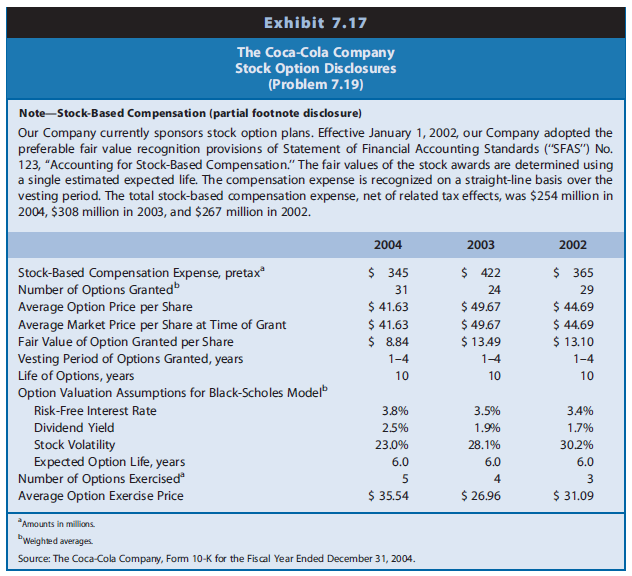
Via requisite modifications, the valuation should incorporate the features described above. Note that, having incorporated these features, the value of the ESO will typically "be much less than Black—Scholes prices for corresponding market-traded options Therefore, the design of a lattice model more fully reflects the substantive characteristics of a particular employee share option or similar instrument. Nevertheless, both a lattice model and the Black—Scholes—Merton formula , as well as other valuation techniques that meet the requirements A KPMG study from suggests that most ESO valuation models use standard valuations based either on Black-Scholes or on lattice approach which have been adjusted to compensate for the special features of typical ESOs.
The IASB reference to "contractual term" requires that the model incorporates the effect of vesting on the valuation. As above, option holders may not exercise their option prior to their vesting date, and during this time the option is effectively European in style.