Measure ad performance. Select basic ads. Create a personalised ads profile.
Select personalised ads. Apply market research to generate audience insights. Measure content performance. Develop and improve products. List of Partners vendors. Active trading is the act of buying and selling securities based on short-term movements to profit from the price movements on a short-term stock chart. The mentality associated with an active trading strategy differs from the long-term, buy-and-hold strategy found among passive or indexed investors.
Active traders believe that short-term movements and capturing the market trend are where the profits are made. There are various methods used to accomplish an active trading strategy, each with appropriate market environments and risks inherent in the strategy.
Here are four of the most common active trading strategies and the built-in costs of each strategy. Day trading is perhaps the most well-known active trading style. It's often considered a pseudonym for active trading itself. Day trading, as its name implies, is the method of buying and selling securities within the same day. Positions are closed out within the same day they are taken, and no position is held overnight. Traditionally, day trading is done by professional traders, such as specialists or market makers.
However, electronic trading has opened up this practice to novice traders. Active trading is a popular strategy for those trying to beat the market average.
- cheapest stock options commissions;
- 4 Common Active Trading Strategies.
- Day Trading Strategies - Beginners To Advanced Traders, Strategy is Key..
- forex service near me.
- 100 percent accurate forex indicator;
Some actually consider position trading to be a buy-and-hold strategy and not active trading. However, position trading, when done by an advanced trader, can be a form of active trading. Position trading uses longer term charts — anywhere from daily to monthly — in combination with other methods to determine the trend of the current market direction. This type of trade may last for several days to several weeks and sometimes longer, depending on the trend.
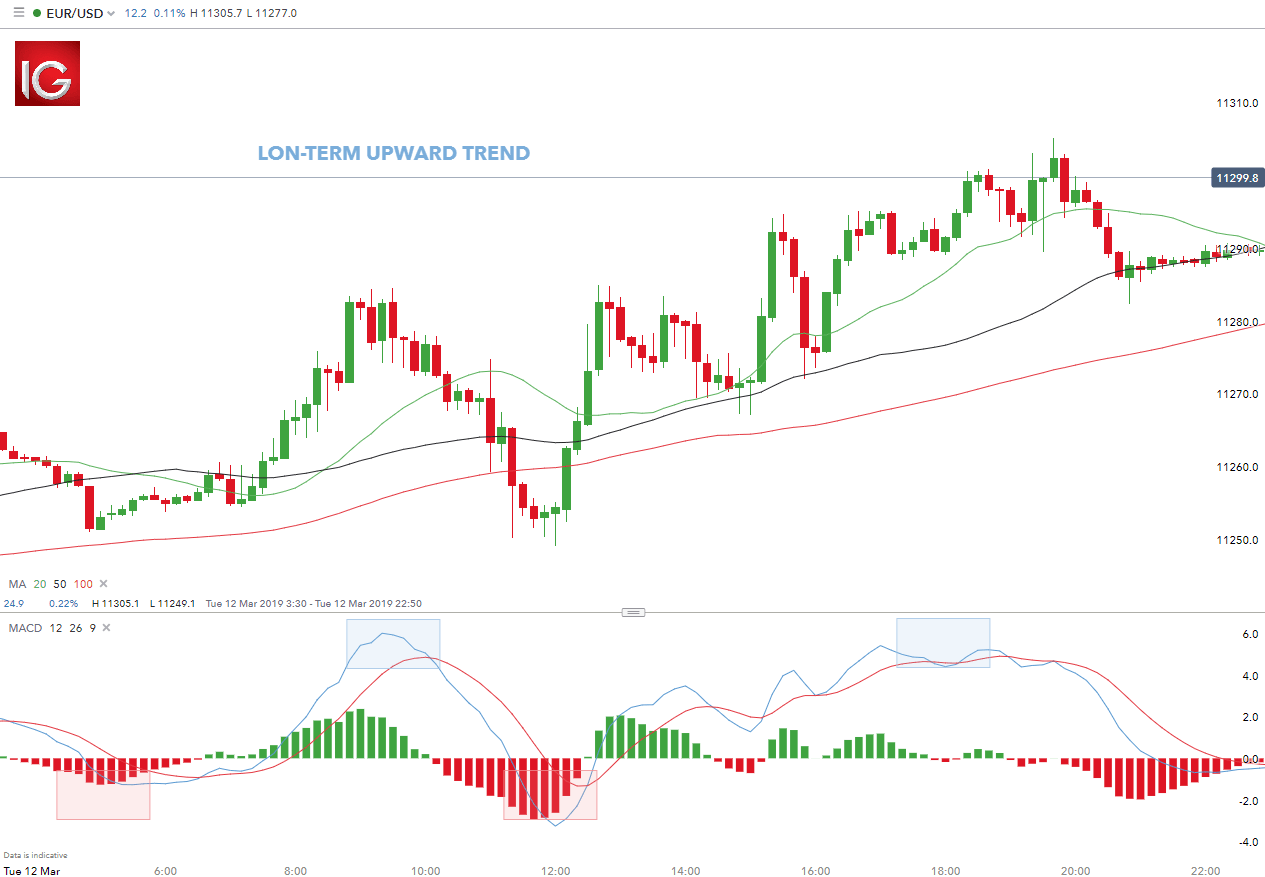
Trend traders look for successive higher highs or lower highs to determine the trend of a security. By jumping on and riding the "wave," trend traders aim to benefit from both the up and downside of market movements. Trend traders look to determine the direction of the market, but they do not try to forecast any price levels. Typically, trend traders jump on the trend after it has established itself, and when the trend breaks, they usually exit the position.
This means that in periods of high market volatility, trend trading is more difficult and its positions are generally reduced. When a trend breaks, swing traders typically get in the game. At the end of a trend, there is usually some price volatility as the new trend tries to establish itself. Swing traders buy or sell as that price volatility sets in. Swing trades are usually held for more than a day but for a shorter time than trend trades. Swing traders often create a set of trading rules based on technical or fundamental analysis. These trading rules or algorithms are designed to identify when to buy and sell a security.
One of the most powerful means of winning a trade is to make use and apply Forex trading strategies. The first strategy to keep in mind is that following a single system all the time is not enough for a successful trade. Each trader should know how to face all market conditions, however, is not so easy, and requires a in-depth study and understanding of economics.
Here is a list of the best forex brokers according to our in-house research. Forex is a combination of foreign currency and exchange. Foreign exchange is the process of changing one currency into another currency for a vast variety of reasons, including:. Forex, or foreign exchange, is explained as a network of buyers and sellers, who transfers currency between each other at an agreed price.
Navigation menu
By doing this individuals, companies and central banks convert one currency into another. While a lot of foreign exchange is done for practical purposes, the vast majority of currency conversion is undertaken with the aim of earning a profit. Learning how to trade Forex can be a complicated process for beginners. Most people have a dream of getting rich overnight, which may turn out exactly as unrealistic as it sounds. There are a lot of figures in regards to how many traders successfully make money and how many traders occur a loss of money.
First you will need:. Download our free e-book. Decoding the most common terms used in forex will speed up traders understanding of the world of currencies: Currency Nicknames:. Technical Indicators in Forex Trading Strategies Technical indicators are the calculations based on the price and volume of a security, and are used both to confirm the trend and the quality of chart patterns , and to help traders determine the buy and sell signals.
In Forex technical analysis a chart is a graphical depiction of price movements over a certain time frame. Perhaps the major part of Forex trading strategies is based on the main types of Forex market analysis used to understand the market movement. What is Forex technical analysis? Forex technical analysis is the study of market action by the primary use of charts for the purpose of forecasting future price trends. Forex traders can develop strategies based on various technical analysis tools including —. Forex traders can conduct a Multiple Time Frame Analysis by the use of different timeframe charts.
Technical analysis strategies are a crucial method of evaluating assets based on the analysis and statistics of past market action, past prices and past volume. Trends represents one of the most essential concepts in technical analysis. All the technical analysis tools that are used have a single purpose and that is to help identify the market trends. What is a Forex Trend? Much like any other trend for example in fashion- it is the direction in which the market moves. More precisely and good to know, the foreign exchange market does not move in a straight line, but more in successive waves with clear peaks or highs and lows.
There are three types of trends that the market can move in:.
6 Trading Strategies Every Trader Should Know | CMC Markets
During any type of trend, traders should develop a specific strategy. The buying strategy is preferable when the market goes up and equally the selling strategy would possibly be profitable when the market goes down. But when the market moves sideways the third option — to stay aside — will be the cleverest decision. In order to fully understand the core of the support and resistance trading strategy, traders should understand what a horizontal level is. A horizontal level is:. In order to develop a support and resistance strategy traders should be well aware of how the trend is identified through these horizontal levels.
Range trading identifies currency price movement in channels to find the range. This process is carried out by connecting a series of highs and lows with a horizontal trendline. In order to determine the upward or downward movement of the volume, traders should look at the trading volume bars usually presented at the bottom of the chart.
Trading strategy
Using Multiple Time Frame Analysis suggests following a certain security price over different time frames. Some key considerations include:. Understanding these differences in market expectations is crucial to success when using a news trading strategy. For more in-depth tips, read our article about trading news releases here, which covers various factors that are popular with regular traders. Markets need energy to move and this comes from information flow such as news releases. This motto suggests that it can be better to trade on price action before an announcement rather than simply waiting for the announcement.
Doing so may protect the trader from the volatility than can follow a rumoured announcement. The end-of-day trading strategy involves trading near the close of markets. End-of-day traders can then speculate how the price could move based on the price action and decide on any indicators that they are using in their system. Traders should create a set of risk management orders including a limit-order, a stop-loss order and a take-profit order to reduce any overnight risk.
This style of trading requires less time commitment than other trading strategies. This is because there is only a need to study charts at their opening and closing times. Swing trading is purely a technical approach to analysing markets, achieved through studying charts and analysing the individual movements that comprise a bigger picture trend. Successful swing trading relies on the interpretation of the length and duration of each swing, as these define important support and resistance levels.
Additionally, swing traders will need to identify trends where the markets encounter increasing levels of supply or demand. Traders also consider if momentum is increasing or decreasing within each swing while monitoring trades. Swing trading can offer a good risk-reward ratio if a plan is followed. However, swing traders need to be flexible and must be aware of when their strategy is not working effectively.
Apply now. Practise trading risk-free with virtual funds on our Next Generation platform.
Open a demo account. Day trading or intra-day trading is suitable for traders that would like to actively trade in the daytime, generally as a full time profession. Day traders take advantage of price fluctuations in-between the market open and close hours. Day traders often hold multiple positions open in a day, but do not leave positions open overnight in order to minimise the risk of overnight market volatility.
Many traders look to trade European markets in the first two hours when there is high liquidity. This strategy describes when a trader uses technical analysis to define a trend, and only enters trades in the direction of the pre-determined trend.